Six leaves. One opening.
A rotor moves six metal blades. The four documented apertures change the amount of light reaching the sensor.
f/1.48f/1.8f/2.8f/4
SKC / MECHANISM LAB
Look beneath the surface. Move the parts. Understand what makes it work.
Sources & accuracy ↓Preparing the workbench…
Drag to rotate. Open the shell, change the aperture, and follow the light.
MACHINE / AIRSUPA rotor moves six metal blades. The four documented apertures change the amount of light reaching the sensor.
At equal exposure, relative light follows (1.48 / N)². At f/4, the ideal light is 13.69% of f/1.48. Automatic exposure can compensate.
Follow the camera, board, battery, receiver coil and cooling structure. Signals and energy move; the electronic components do not spin.
The fan divides air between the bypass duct and the core. Follow the cooler bypass stream and the hotter path through compressor, combustor and turbines.
Two concentric shafts connect the high- and low-pressure assemblies. The stator rows stay still while the rotors turn. Rotation is slowed so the parts remain readable.
Airflow, compression, added heat and turbine work drive an idealized cycle solver. Thrust changes with its calculated outlet velocities and mass flow.
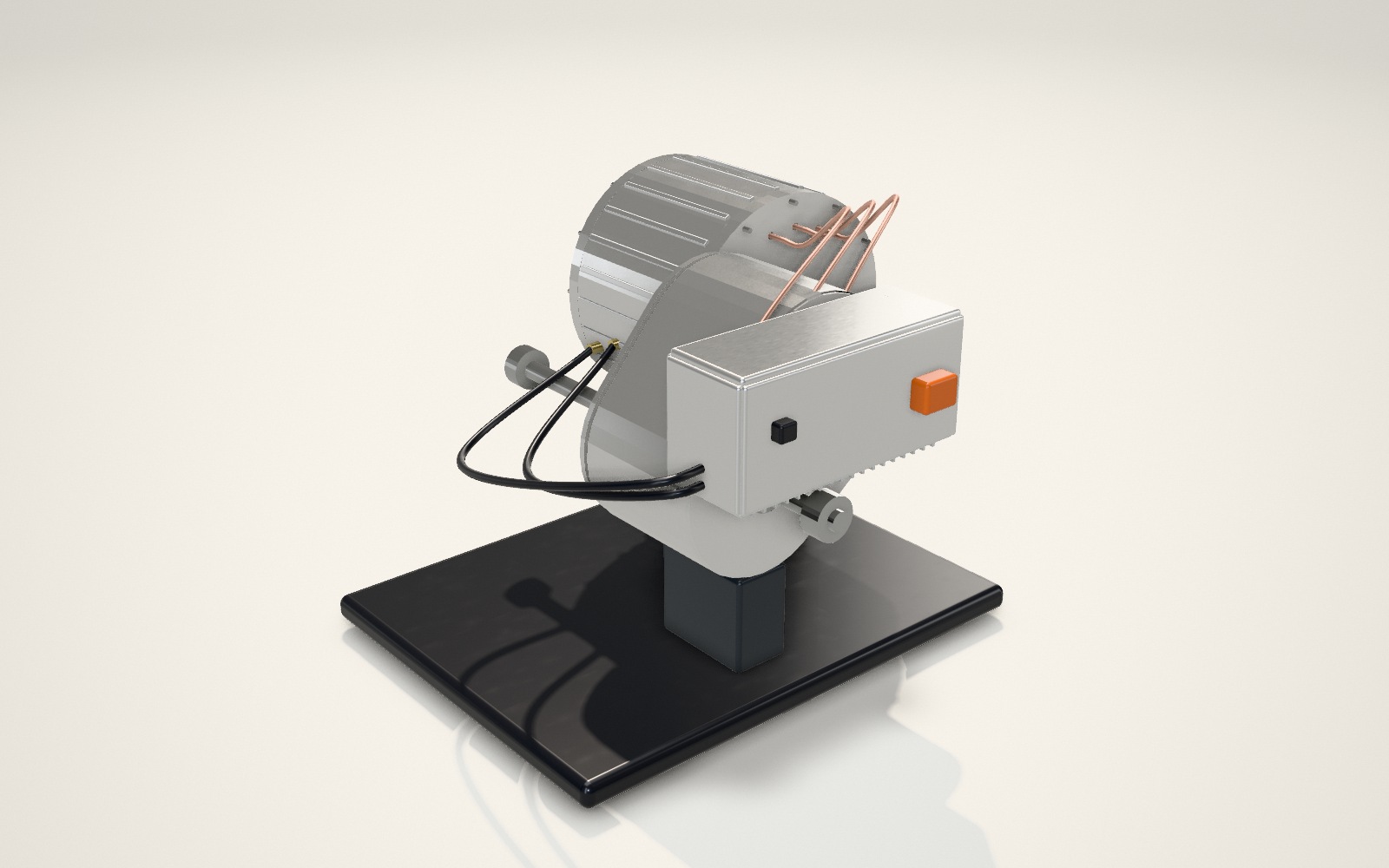
Three-phase current creates a rotating field. Permanent-magnet and reluctance torque act on the rear rotor.
Two gear stages reduce speed by 9.0363:1. The open differential shares equal torque while allowing different wheel speeds.
Change the input and inspect voltage, current, torque and shaft power. Visible rotation uses a common slow-motion scale.
The crown, winding gears and arbor store energy in the mainspring. Its remaining usable turns set the reserve.
The hairspring stiffness and geometry-derived balance inertia set the 2.5 Hz oscillation. The lever meters the escape wheel.
Meshing ratios connect the escape wheel to small seconds, minutes and hours. Motion is slowed together for inspection.
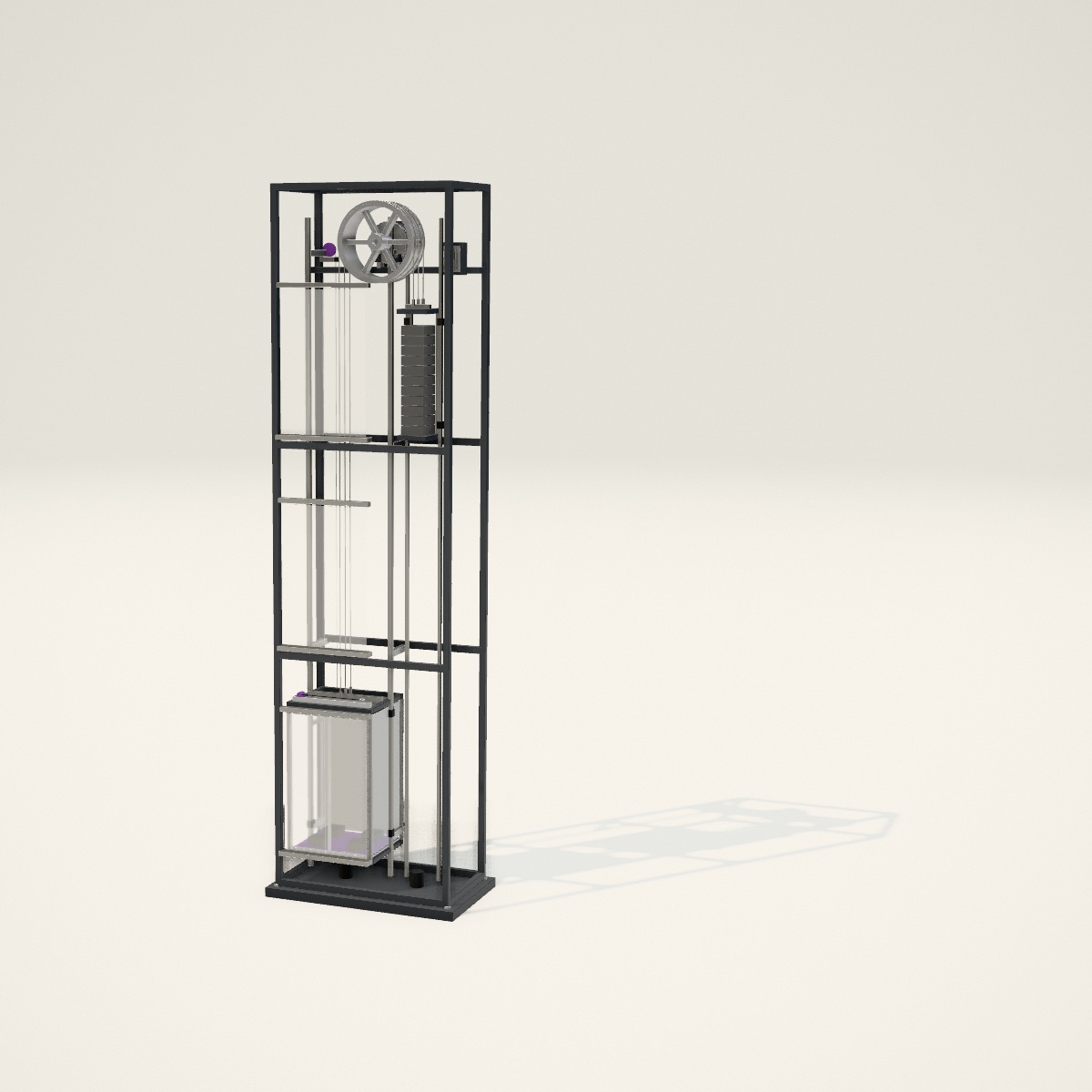
The counterweight is sized to the reconstructed empty car plus half the assumed 800 kg capacity. A constant rope links their inverse travel.
The direct-drive motor turns the sheave. Torque follows load imbalance, acceleration, friction and rotational inertia.
Select a stop and queue a payload. Doors open only when stationary and level. Drive loss applies the spring brake.
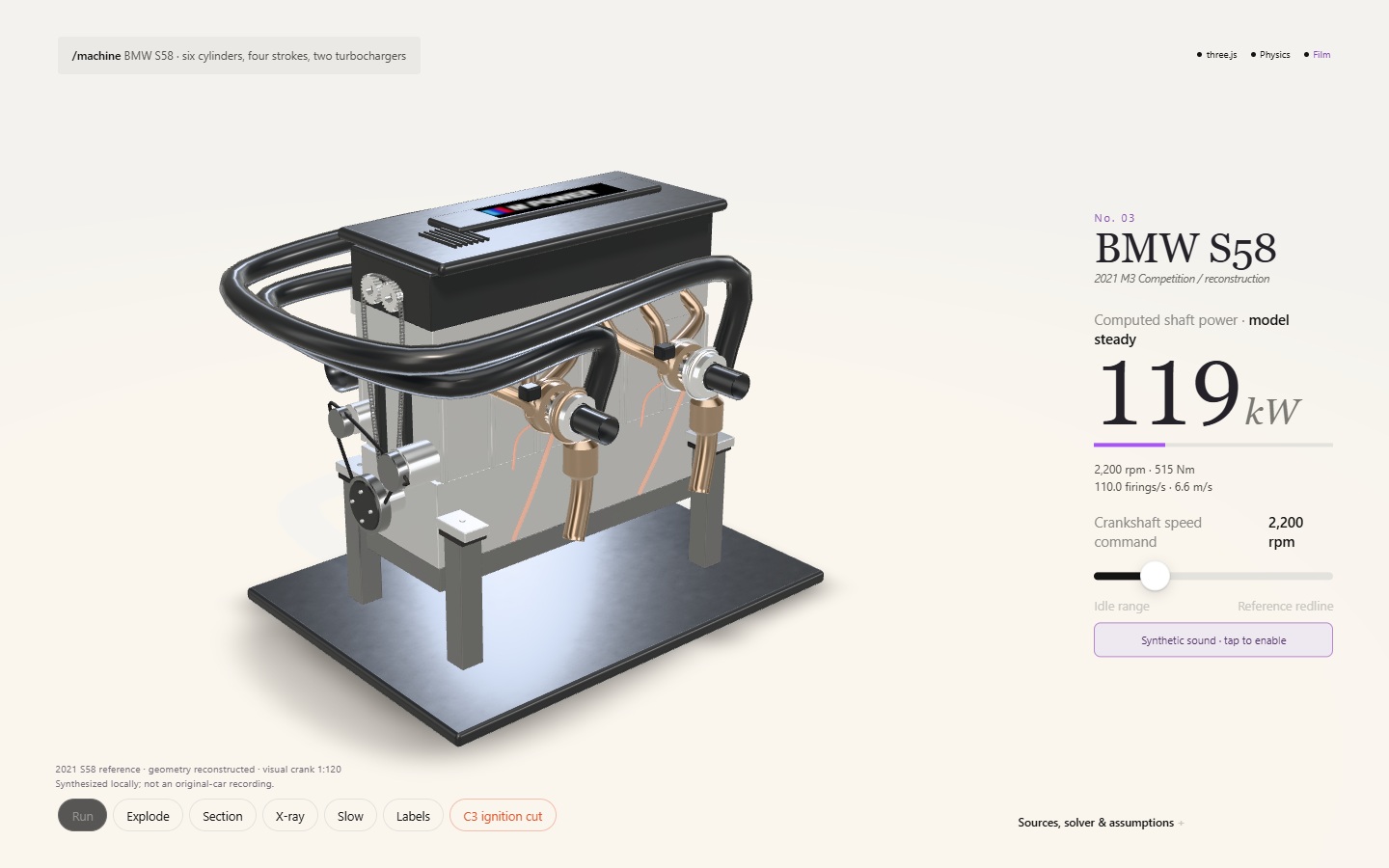
Follow intake, compression, power and exhaust through a 720° crank cycle. Each piston remains connected to its crank pin.
Two camshafts operate 24 valves. The two mono-scroll turbos serve cylinders 1–3 and 4–6 respectively.
The sound is synthesized, not a recording. Its pulse rate follows actual RPM; visible mechanical motion is slowed independently.
AN EXHIBITION THAT GROWS
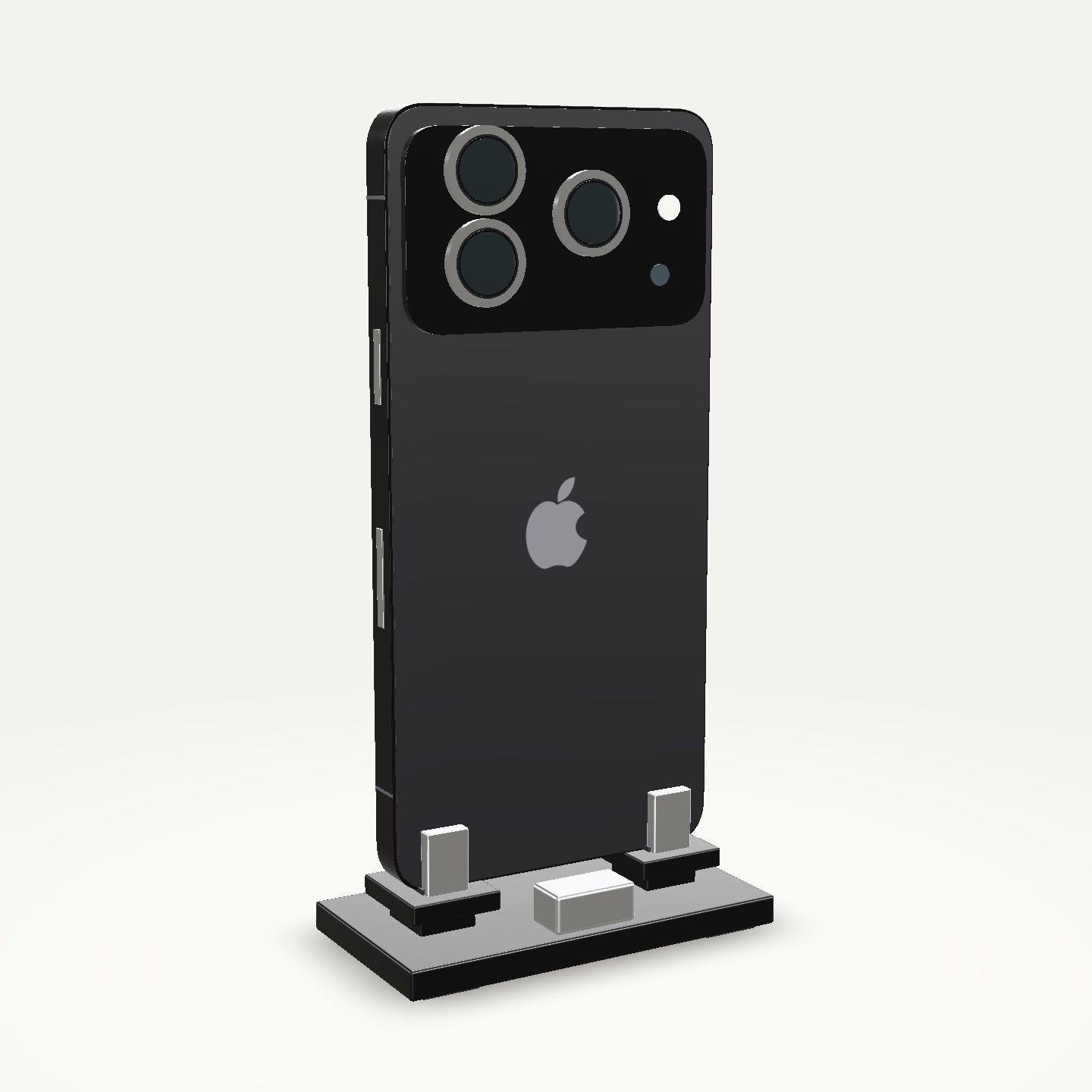
001 / IPHONE 18 PRO
Exterior, optical mechanism and wireless coupling. Three ways to discover the same device.
Explore the work ↗002 / TURBOFAN
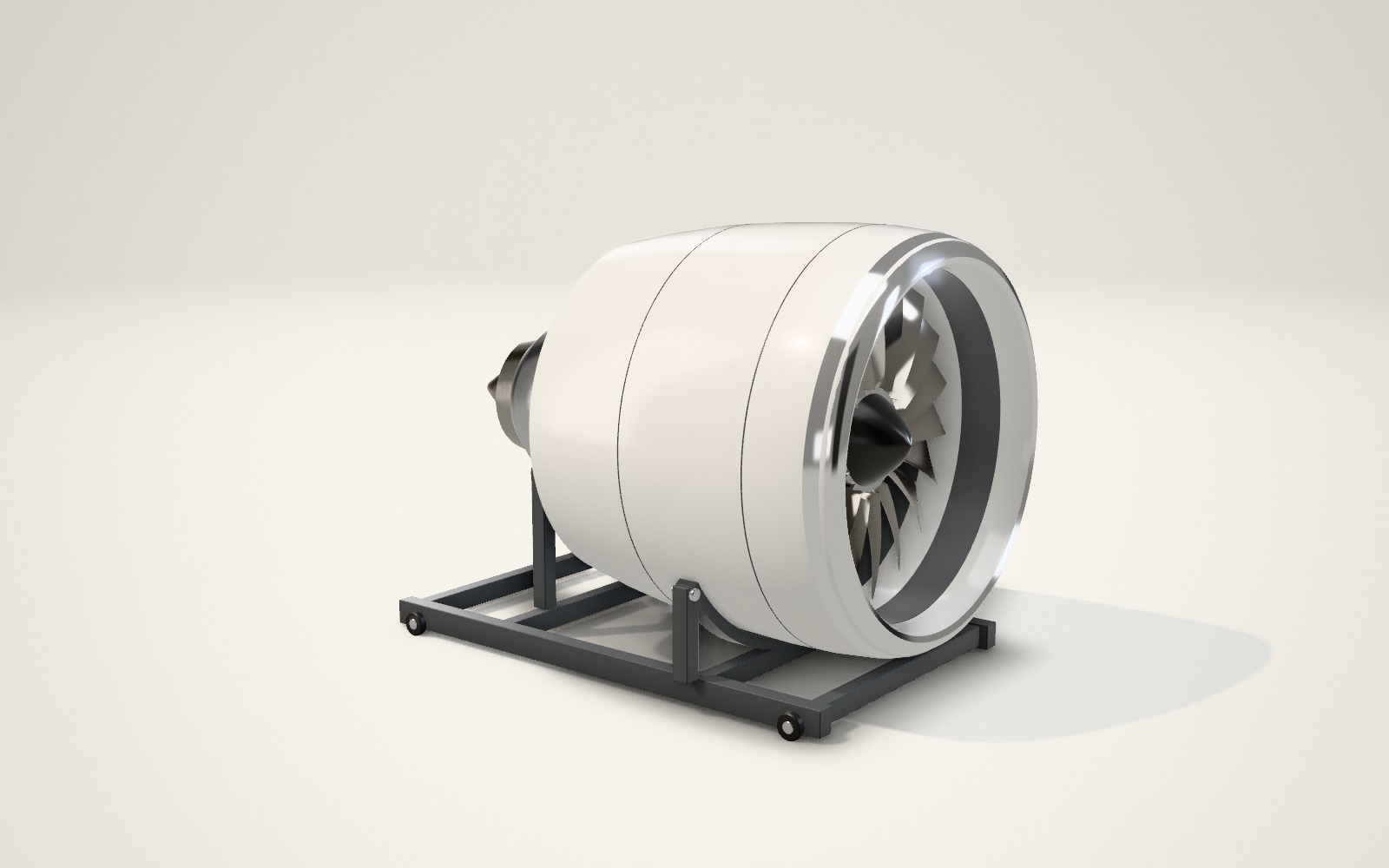
Run the fan, open the core, and follow the working cycle. A moving engine on a real support stand.
Explore the work ↗003 / MODEL 3 REAR DRIVE
A stationary stator, a rotating field, two gear stages and an open differential.
Explore the work ↗004 / MECHANICAL WATCH
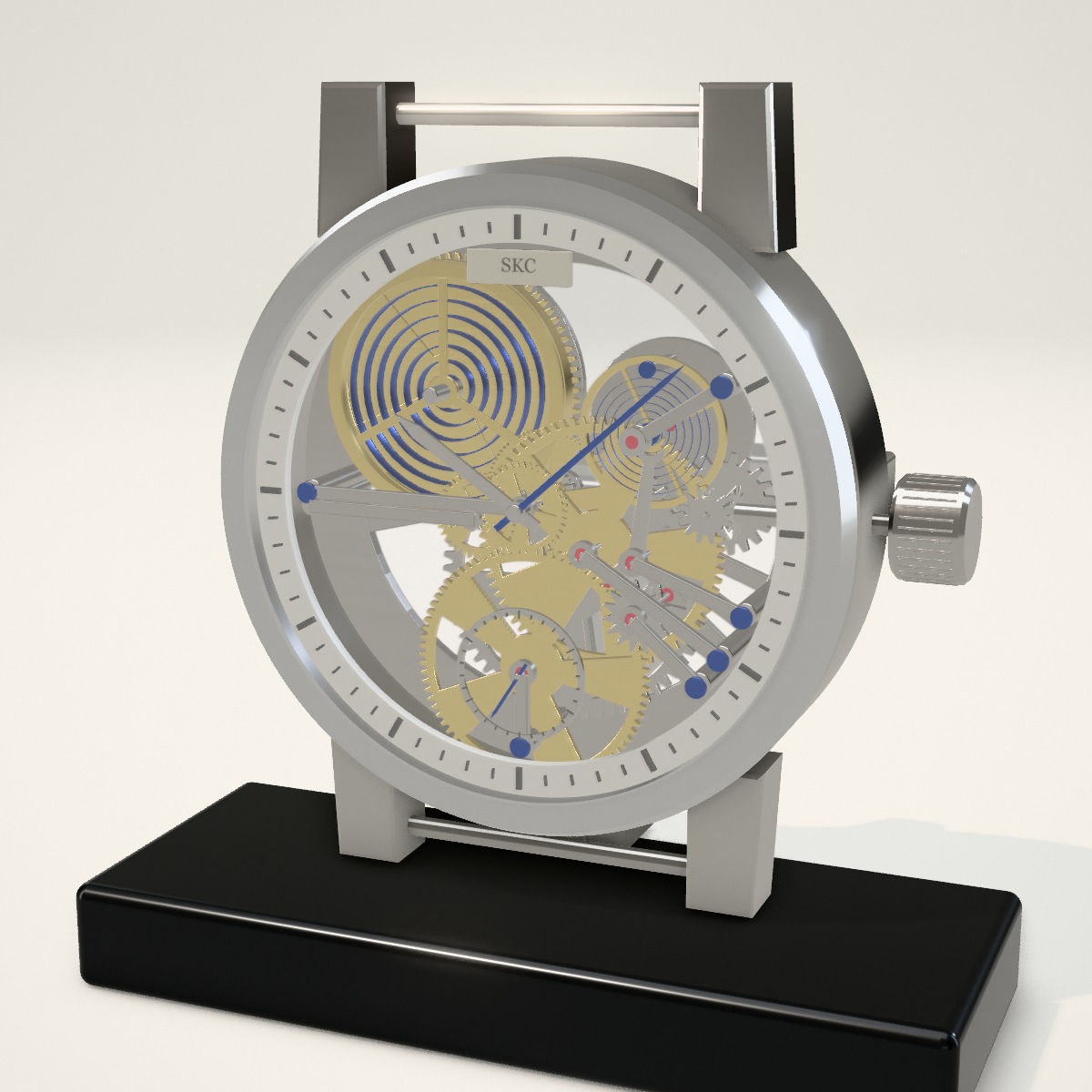
Wind it, reveal it, and follow the escapement that regulates the wheel train.
Explore the work ↗005 / TRACTION ELEVATOR
Three floors, changing payload, regenerative travel and a spring-applied brake.
Explore the work ↗006 / BMW S58 · 3.0T
Crank, valves, cams and twin turbos, with an illustrative sound that follows RPM.
Explore the work ↗REFERENCE / RECONSTRUCTION
Exterior proportions follow Apple specifications and repair references. Small internal geometry and movement are simplified or enlarged for teaching. The model does not reproduce Apple engineering CAD or run iOS.
Light, data and heat traces show their roles. They are visual explanations, not measurements of a live phone.
The fan, bypass duct, compressor, annular combustor and turbines form the working structure. The exhibit uses the Machine Skill reference as a licensed starting point and the provided video for its clear studio presentation.
It is a generic two-spool teaching engine. It does not represent a specific manufacturer's certified engine or a three-spool Trent design.
A zero-dimensional cycle uses static sea-level conditions, component efficiencies and equivalent fully expanded nozzles. Its computed results explain relationships; they are not a certified engine performance map or flight model.
Geometry, fuel scheduling, blade mass and motion are instructional approximations. The standalone work states its equations, assumptions and displayed speed scale.
Tesla documents the historic rear permanent-magnet synchronous motor and nominal 355 V pack. John Kelly’s original teardown gives the 31/81 and 24/83 gear tooth counts and open differential.
This is a teaching reconstruction, not Tesla CAD. Pole/slot count, air gap, magnet geometry, dq parameters, limits and efficiencies are stated assumptions. Readouts use constrained dq equations and P=Tω.
ETA’s current 6498-1 page documents 36.60 mm diameter, 4.50 mm movement height, 17 jewels, 18,000 vibrations/hour and a typical 52-hour reserve.
The steel and sapphire watch, gear layout, enlarged spacing and simplified winding system are original reconstruction. Spring sections, elasticity, damping and efficiency are assumptions; this is not an ETA CAD replica or a certified timing instrument.
TK Elevator describes the direct-drive gearless motor, sheave and counterweight. Otis explains regeneration during light-car ascent or heavy-car descent.
The three-stop 1:1 rope model is not an Otis Gen2 reproduction, which uses 2:1 suspension. Geometry, capacity, friction, efficiencies and timing are assumptions. Rope elasticity and detailed traction are omitted; brake behavior is illustrative, not certification software.
BMW documents the 2,993 cc engine, 84 × 90 mm bore/stroke, 24 valves, 375 kW and 650 Nm, with two mono-scroll turbos serving separate groups of three cylinders.
The reconstruction follows the 2021 reference. Small geometry, combustion, valve profiles and timing are simplified; the displayed firing sequence is a stated teaching assumption pending a primary sequence source. Synthetic sound follows RPM. It does not reproduce BMW CAD, ECU calibration or a measured exhaust recording.